October 18-19 | From Berlin to Lviv
Visit of the Sikhiv Camp
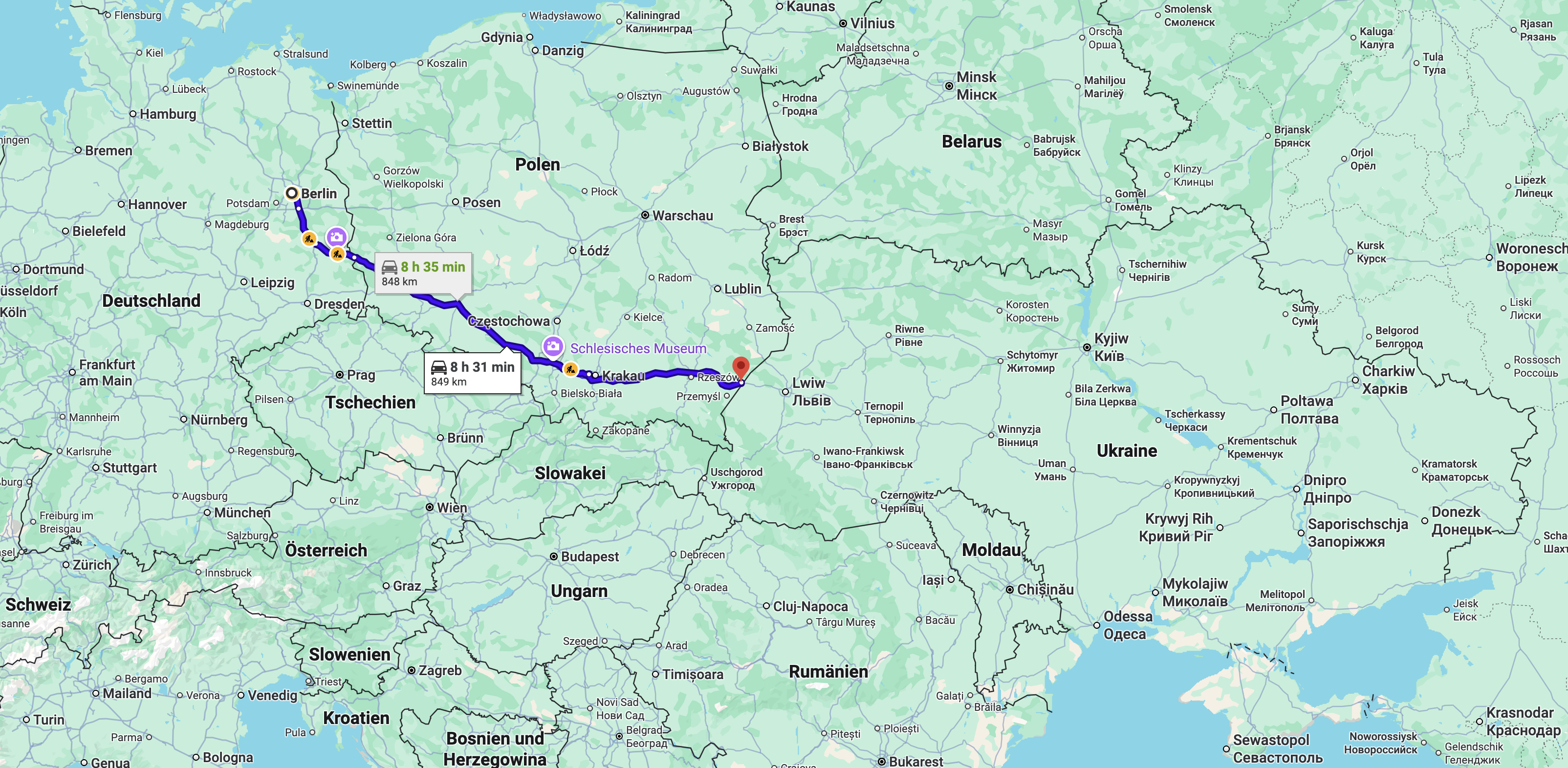
As every year, the departure didn't only mean the last preparations of the van with the humanitarian aid, but more than that - it was the farewell of the entire community boarding on this challenging undertaking. We left Berlin in the evening and drove through Poland with the goal of reaching the Ukrainian border in the early morning.
By 9am, we reached the Polish side at Korczowa, and differently from 3,5 years ago, there was an endless line of vehicles waiting to get into Ukraine, not to get away from the war and reach a safe new destination in the European Union - in these last years, many Ukrainians residing outside their homeland have often been going back to visit their relatives and even the business related traffic into West-Ukraine has been picking up, even if the economy is still very much crippled by the Russian attacks.
Thus, in order to make it in time for the appointments in Lviv, we followed the advice given by our partners at Koridor UA and we rerouted 40 km north to Budomierz, where we were the only vehicle to face the border police; after just 15 minutes, we cleared customs on both sides and finally entered Ukraine... and every year it feels the same: doing the right thing in the place where we are supposed to be.
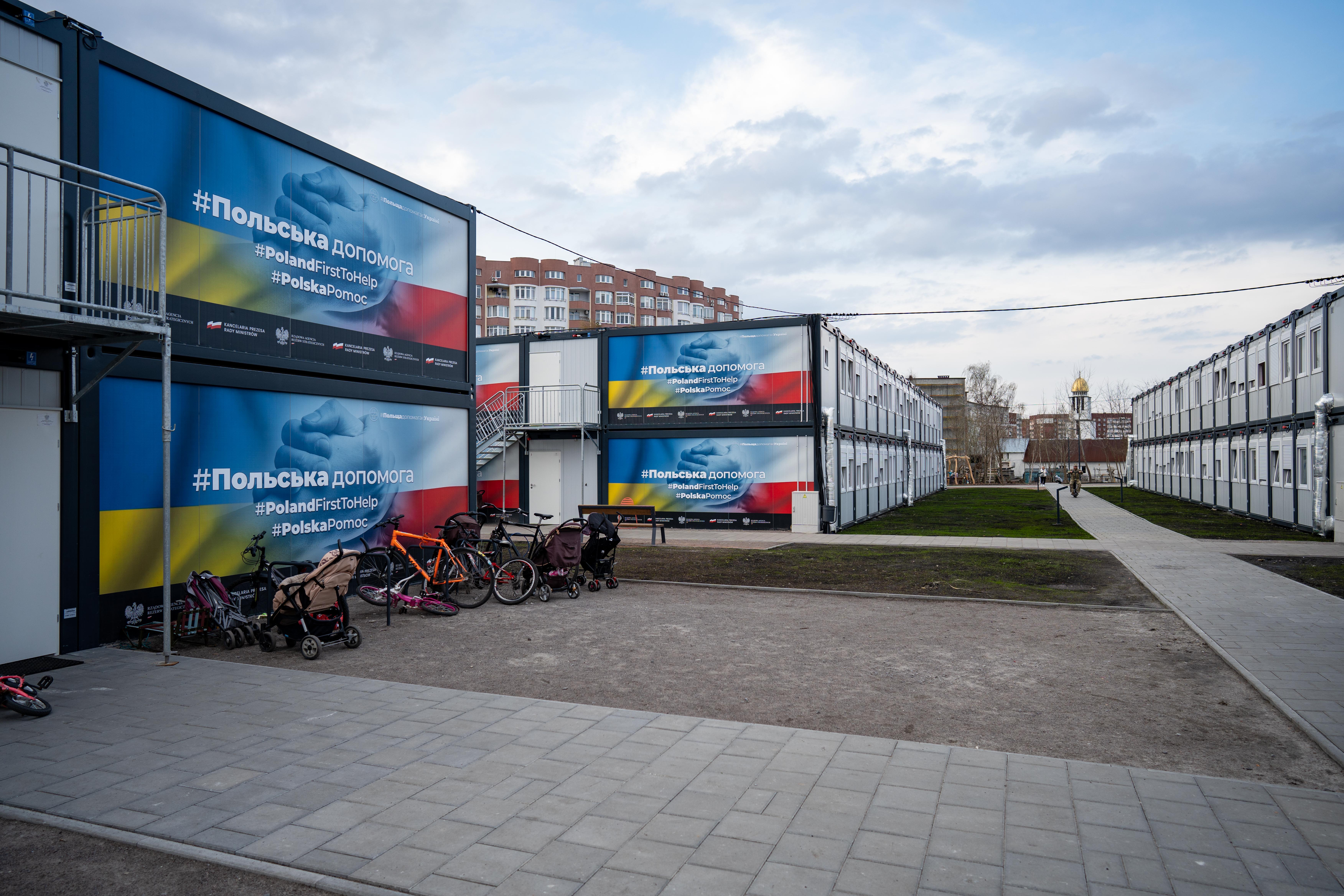
Around 11am, as soon as we arrived in Lviv, we headed directly towards the Sikhiv IDP camp, still home to up to 900 internally displaced people. Unable to meet the camp director Don Andri, known to us since 2023, we connected instead with Galina, the head chef, who shared updates on daily struggles and warmly received our relief aid. Lviv is facing a severe economic crisis and the meals provided by the facility to the entire neighbourhood are essential to the refugees (still unemployed and often left without the financial support provided by the government in the first 2 years of war), but also to the elderly living in the neighbourhood.
In the early afternoon, upon request of the Sant'Egidio center coordinator, we procured some more relief aid in one of the Epicentre, a chain of of Ukrainian hypermarkets. The choice to purchase most of the humanitarian aid locally was thought in support to the struggling national economy. We would deliver the hygiene essentials the next morning before our drive to Kyiv, our next destionation.
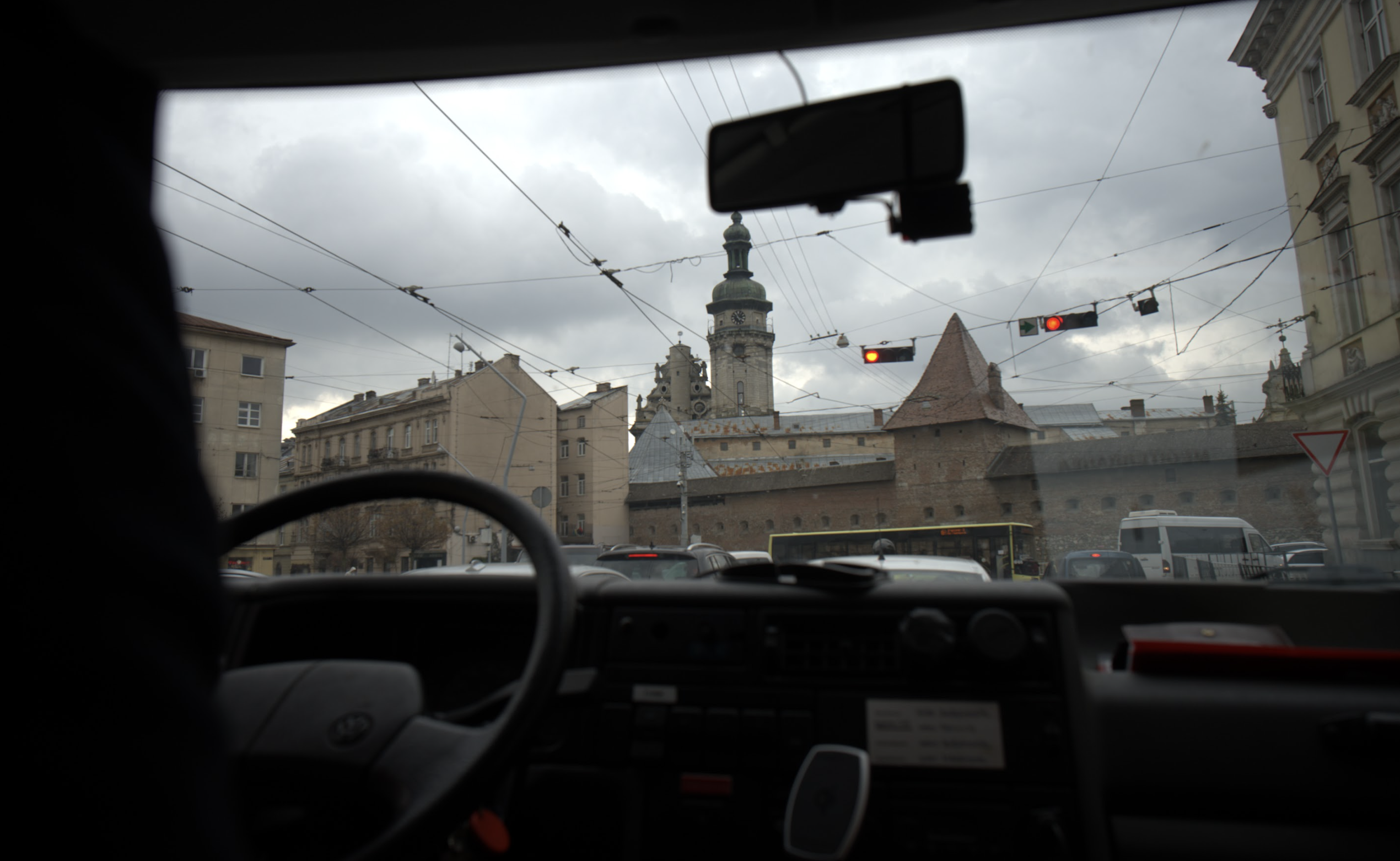
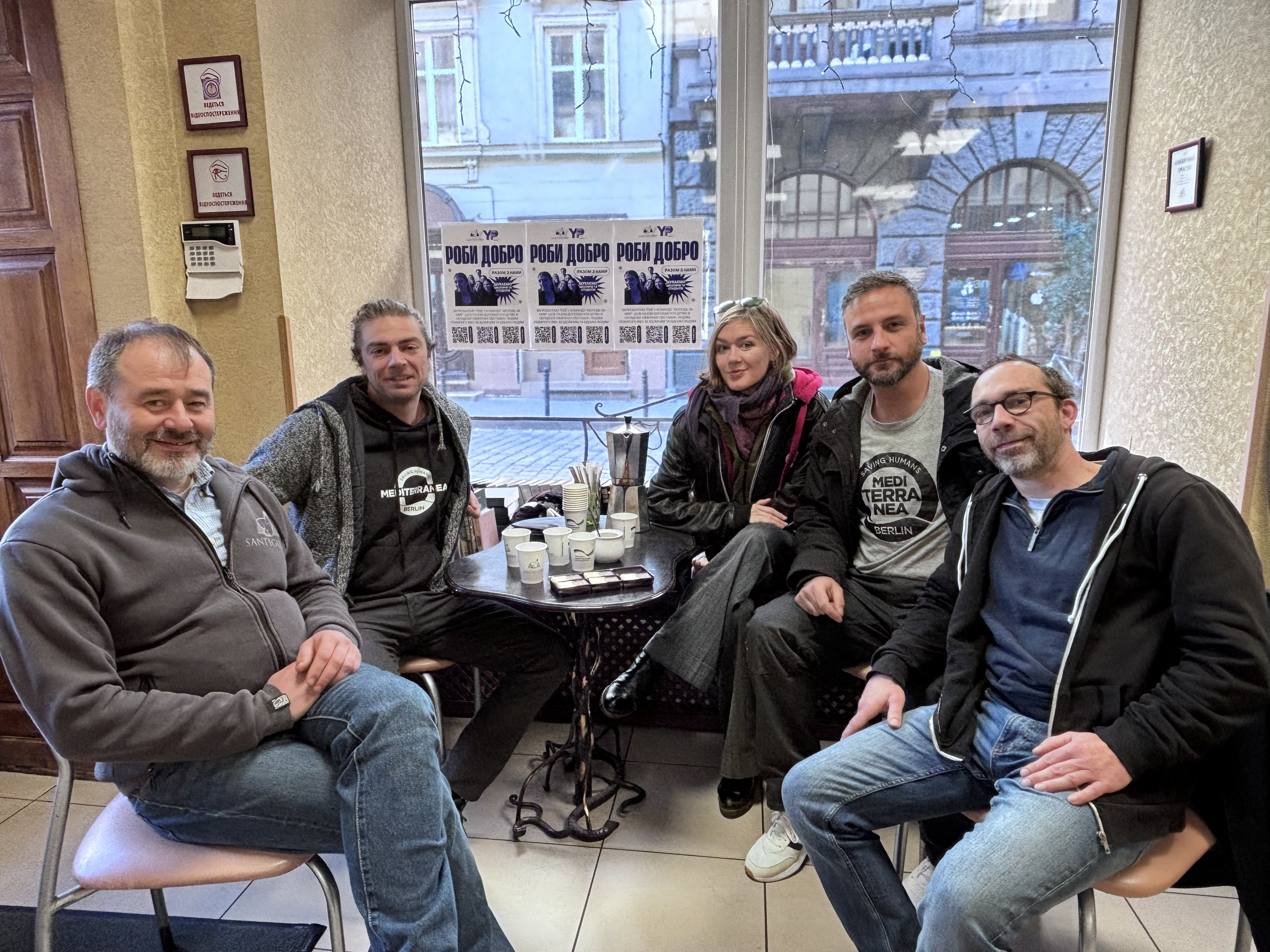
At 4pm, on our quest to engage with local political groups involved with supporting IDPs, we met 2 left-wing activists formerly with Sozialni Ruh, a collective we got acquainted with in 2024. These young activists are forging a new political movement, free from prejudices tied to left-wing ideologies in post-Soviet contexts. Even if aware of the utter difficulty of the endeavor under the current circumstances, they are willing to struggle to become a part of the future political spectrum of a Ukraine on the verge of reconstruction. They wish to embody a necessary alternative to their biggest political concern: the far-right dominance in the postwar Ukraine, as wartime unity against a common enemy may fracture in peace.
October 20 | Lviv
Visit to Sant'Egidio
At 11am, we joined Iura, Sant'Egidio Lviv coordinator. Our traditional exchange was now marked by heightened worry. The situation worsens daily, with no just peace in sight; Trump's recent election sparked hopes for diplomatic resolution, "shifting Ukrainian politics from military to negotiation focus". But it didn't last long.
From the streets outside, the sound of the alarm was constantly present in the background of our conversation: "you cannot stop life, but you cannot get used to the bombs either... the shelling is constant". Russia is systematically attacking the electrical infrastructure and lately even the railway.
"War doesn't finish with the last shot, peace needs to be built. When asked if ceding occupied territories would be an acceptable peace on which it is possible to build, Iura deferred to politicians: "This is why we pay them."
During the long drive to Kyiv, the over two-hour engaging conversation with Iura brought to mind a recent event. A couple of weeks before our departure, during a fundraising event organized by our association, some activists of the Berlin-based Left Initiative for Ukraine answered the same question by saying that "living outside the country doesn't allow us to take this decision".
October 21 | Kyiv
Children's Workshop
At 1:30 PM we headed towards the location communicated by WeWorld, one of our new partners, where we were conducting our first children's workshop of the mission.
(Our initiative was based on the workshops we gave last year in Kherson and Mykolaiv, so we extended our offer to the WeWorld children centers in Kyiv and Charkiv.)
Kyiv has been managing the IDP crisis differently and the way the community integrated the IDP children (in majority Russian speakers) is a remarkable undertaking, mainly supported by NGOs.
And that day was to mark the beginning of yet another partnership: on our way to the WeWorld facility, due to a poor GPS signal, we ended up in a different part of Kyiv and accidentally met another organization involved in work with children, SOS Children's Villages. After exchanging contacts, we set up a meeting for the next day to get to know each other better.
By 2:30 PM, we arrived at the Psychological and Physical Rehabilitation Center administered by WeWorld, where we encountered nearly 20 children, mostly from Eastern Ukraine. This year's workshop centered on the concept of rebuilding a home, a sensitive topic for many of these children and their families.
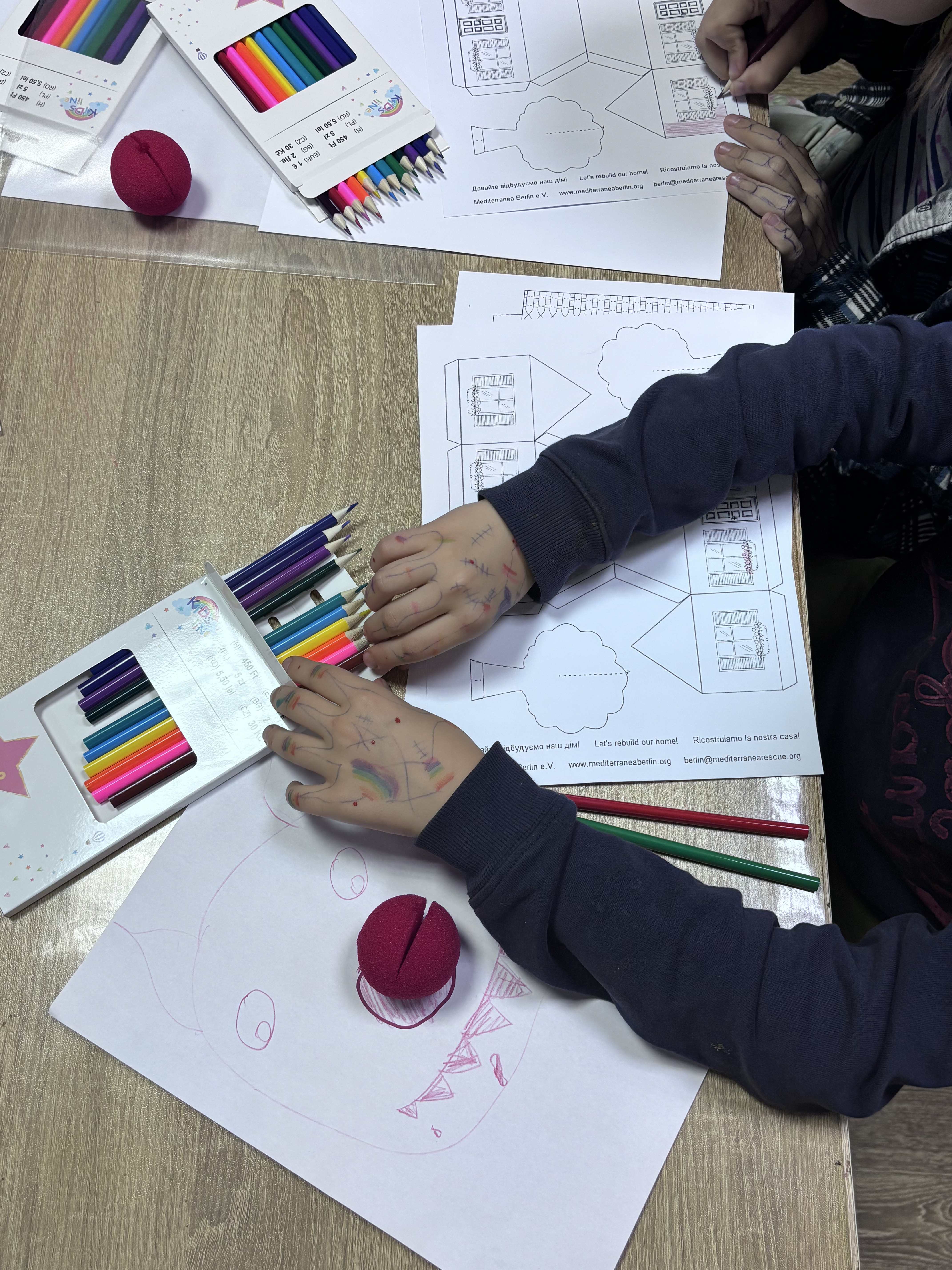
With the help of educators and social clowns, we landed on the figure of the Clown — universally known for its ability to connect with anyone. But having only one Clown in the room wasn't enough: for everyone to truly communicate with each other, everybody had to become a Clown. Our goal was achieved, we had managed to create a safe space, far away from the cruel war reality outside those walls... when, all of a sudden, that very reality stepped in. An air raid alert broke into our safe space, forcing us all to climb down the stairs and reach the shelter, where we continued the activities.
When the alert was over, we went back upstairs, and it felt like nothing had happened - the room was again the safe space from before... This is the daily life of millions of children in Ukraine, where toy tanks and soldiers move among newly reconstructed houses.
At the end of the day, the children blocked the exit and didn't want to let us go. We didn't want to leave either, but we had to. Fortunately, Iura from Sant'Egidio Lviv had given us chocolate for the children—a way to sweeten our departure.
October 22 | Kyiv
Building new partnerships
The following day at the Kyiv HQ of SOS Children's Villages, we met Olena, the communications manager, who introduced us and our organization to the coordinators of their Kyiv, Kharkiv, and Mykolaiv branches. We asked her about the presence of a soldier at the SOS village where we accidentally met the day before. Olena explained to us that he was a veteran who had lost a leg, the first guest of a series of encounters with traumatized children, some of whom had stopped speaking. There are many ways in which his presence is helpful: "a veteran with a prosthetic limb shows that one can be wounded and still present, still alive, still functional. For a child who feels 'broken' on the inside, seeing someone who carries a visible wound with dignity — without hiding it — is an extraordinarily powerful message".
Hours of open dialogue revealed shared goals in supporting vulnerable children, forging a commitment to future collaboration — including a workshop in Kharkiv - in the next 2 days. They invited us to visit their Irpin center the next day, just before our drive northeast.
October 23 | Irpin
Visiting SOS Children's Village center
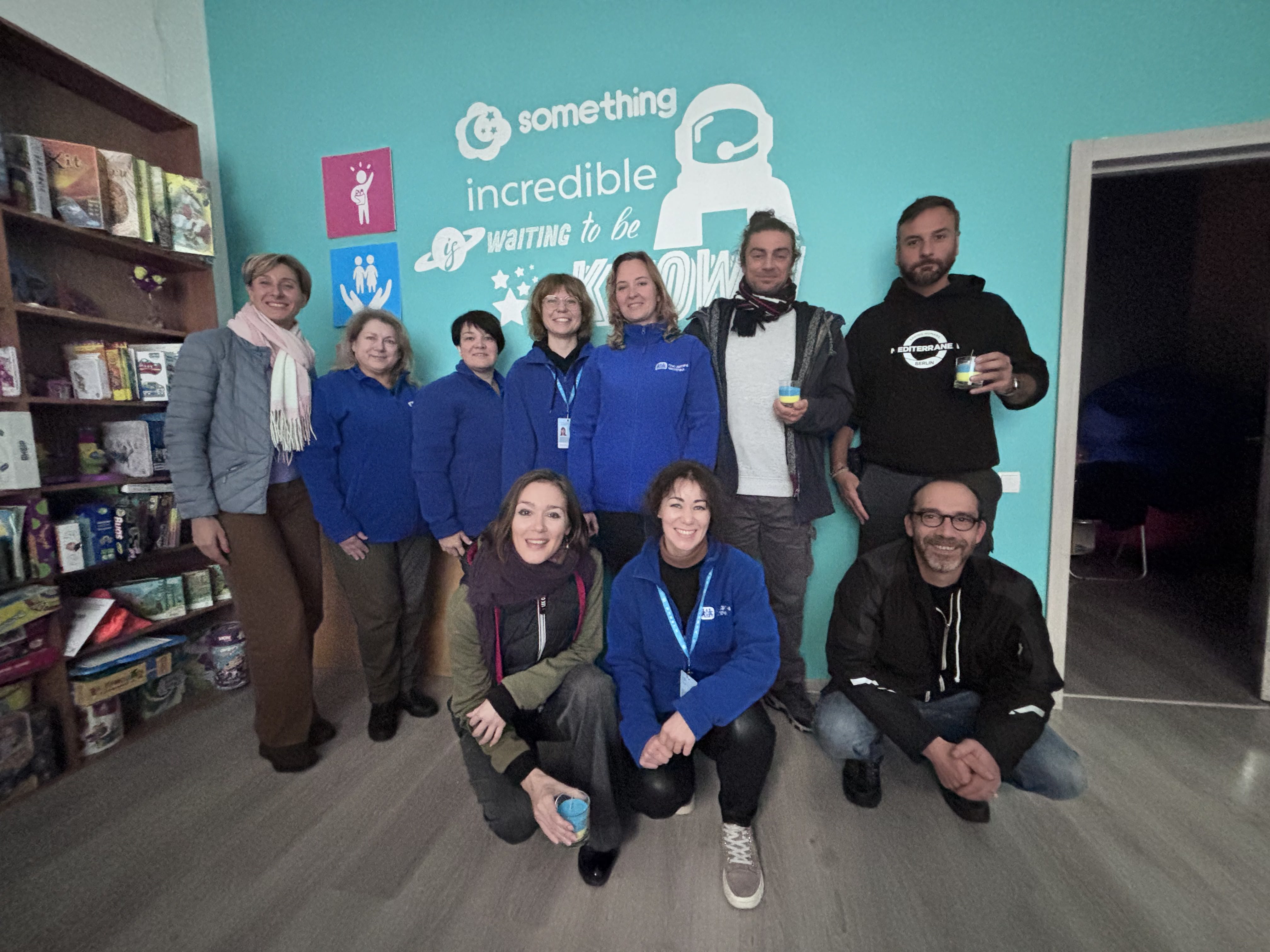
By 11am, we reached Irpin, — a town that will never forget the brutality of Russian troops inflicted in March 2022. Here, rebuilding lives continues despite one of the war's most documented atrocities and the ongoing shelling. Right the night before our arrival, missiles had caused the destruction of civilian houses and blackouts.
Yet here stands a SOS Children's Villages center, stubbornly alive and open even on such a day, even if no children were to be seen in the many and all purposeful coloured rooms. We were lucky enough to meet the dedicated, always smiling staff and inspiring mothers from Eastern Ukraine who had reinvented themselves and started anew in the once devastated Irpin. Their stories of recovery amid devastation underscored the vital, ongoing role of such organizations in Ukraine's healing process. Reconstruction is not only about bricks and infrastructure — it is about restoring the invisible daily web of relations, trust, and hope that war systematically tries to destroy. But not here in Irpin, a place that had every reason not to exist anymore — and yet does.
A destiny shared by the next city we are headed to, ready to bring creativity to its youngest residents: Kharkiv, Ukraine's second largest city and the closest to the Russia. Our arrival, shortly before the curfew, was exactly what you would expect from a city less than 40km from the Russian border: GPS jamming and sirens that never stop to sound.
October 24 - 25 | Kharkiv
Workshop Days Amid Sirens
We wake up to the same background noise we fell asleep with, a proper soundtrack of this city. One of Putin's obsessions, Kharkiv has been a constant target of occupation attempts. Only in the first half of 2025 the city suffered over 420 aerial attacks against civilian infrastructure and residential areas. The risk is so high that the GPS signal is mostly jammed to obstruct enemy drones and missiles.
Thus moving around the city resulted in a constant challenge. Under such circumstances we were expecting an empty city plagued by fear. But instead we encountered a community able and willing to live a normal life even if their home, their City Council, their children center have shattered windows covered in wood.
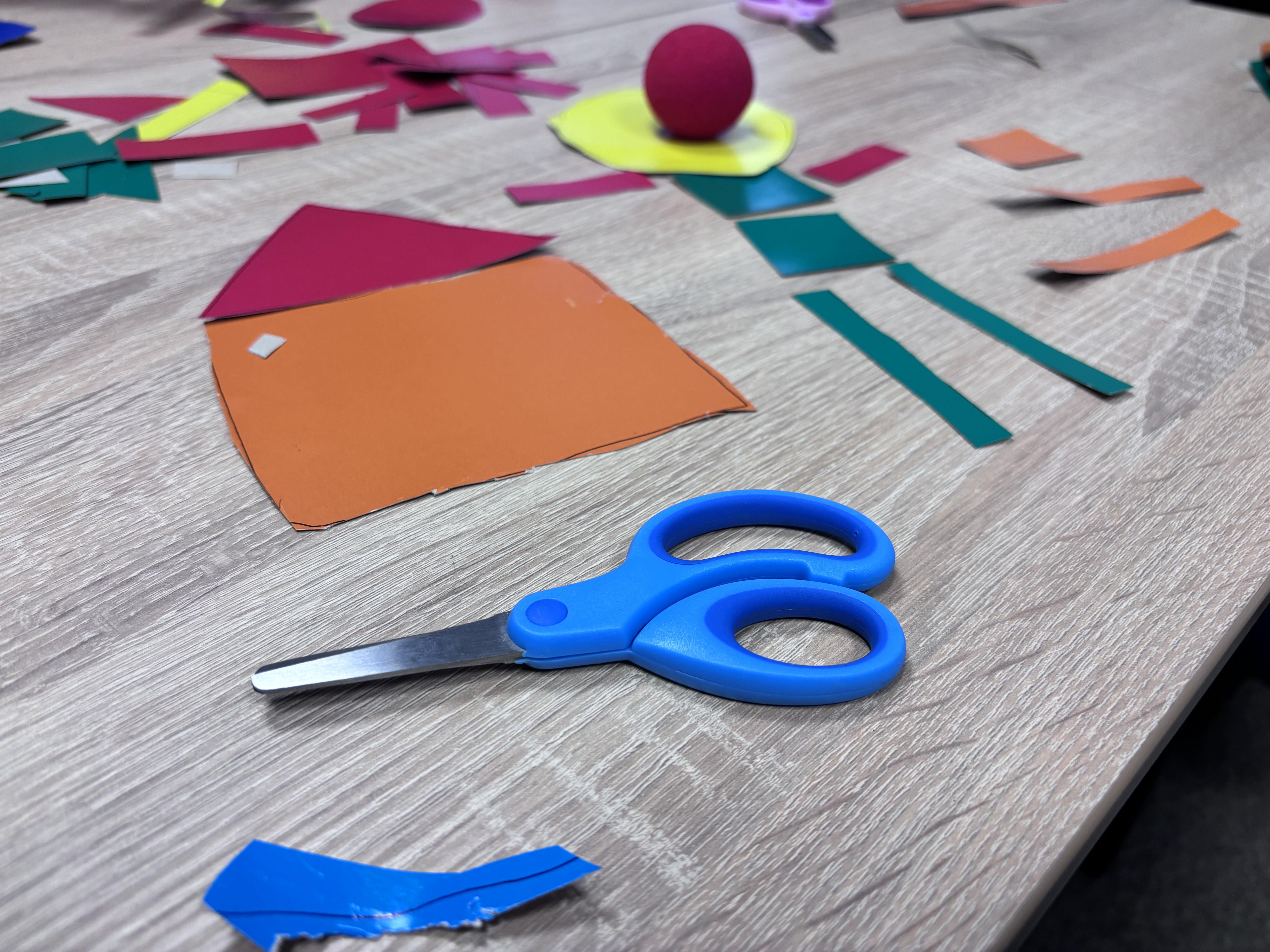
In the morning we held our first workshop at SOS Children's Villages. As the children there were younger (ages 4 to 8), we adapted our session and introduced “Shapes in Motion” — a creative method where kids learn how rearranging geometric forms can spark new ideas and expressions. It’s a powerful tool to foster imagination, resilience, and adaptability. It reinforces their decision-making, creative power, and sense of control during uncertain times. Last, but not least, our red noses worked their magic here too.
In the early afternoon, we reached the Mirno Nebo centre, another facility supported by WeWorld.
The centre is very well equipped, there were about 15 children present, from 6 to 10 years old. There were all sorts of school supplies available - which turned out to be very helpful, just as the presence of the 2 educators, who spoke good English and assisted us in our work.
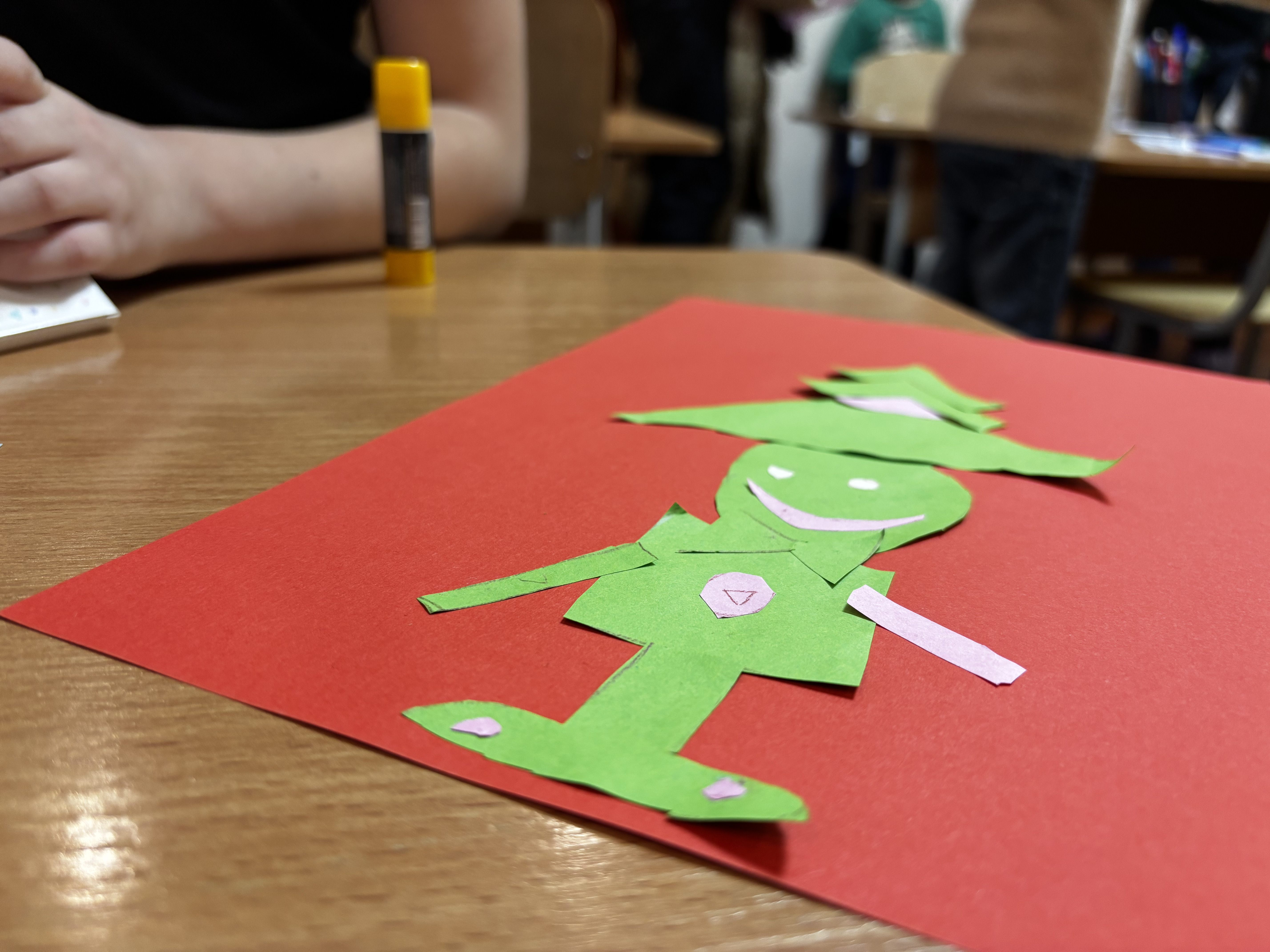
At this location we held the workshop in its original version, given the age of the children. In order to become a Clown the kids had to draw their own portrait in clownish version. This first part was very successful and introduced wonderfully the second part of the activity, the shaping of a dream house by coloring and paper cutting.

The second day in Kharkiv was dedicated to the second Mirno Nebo centre supported by WeWorld situated in the North-East of the city, in the direction of the Russian border. Danilo, the extremely nice and helpful contact person who guided us all through the day and took part in our activities as one of the older clowns helping out with the kids. He is 20 years old, almost of age to be sent to the front "it is not easy to live with this certainty".
When asked what he would miss the most he answered the children here at the center "I don't consider this a job, staying on their side means building our future".
Similar thoughts came to our minds on the very first workshop we held for Koridor UA in Kherson the year before. It is unbelievable how powerful children can be. Spending time with them gives you a completely different perspective. It forces you to think in terms of 10, 20, 50 years from now, exactly the contrary of the constant fear of the now produced by the war - a mental cage which conditions your everyday actions. Ours as well.
October 26 - 27 | From Kharkiv to Mykolayiv
Aid Delivery - Frontline Rebuilding
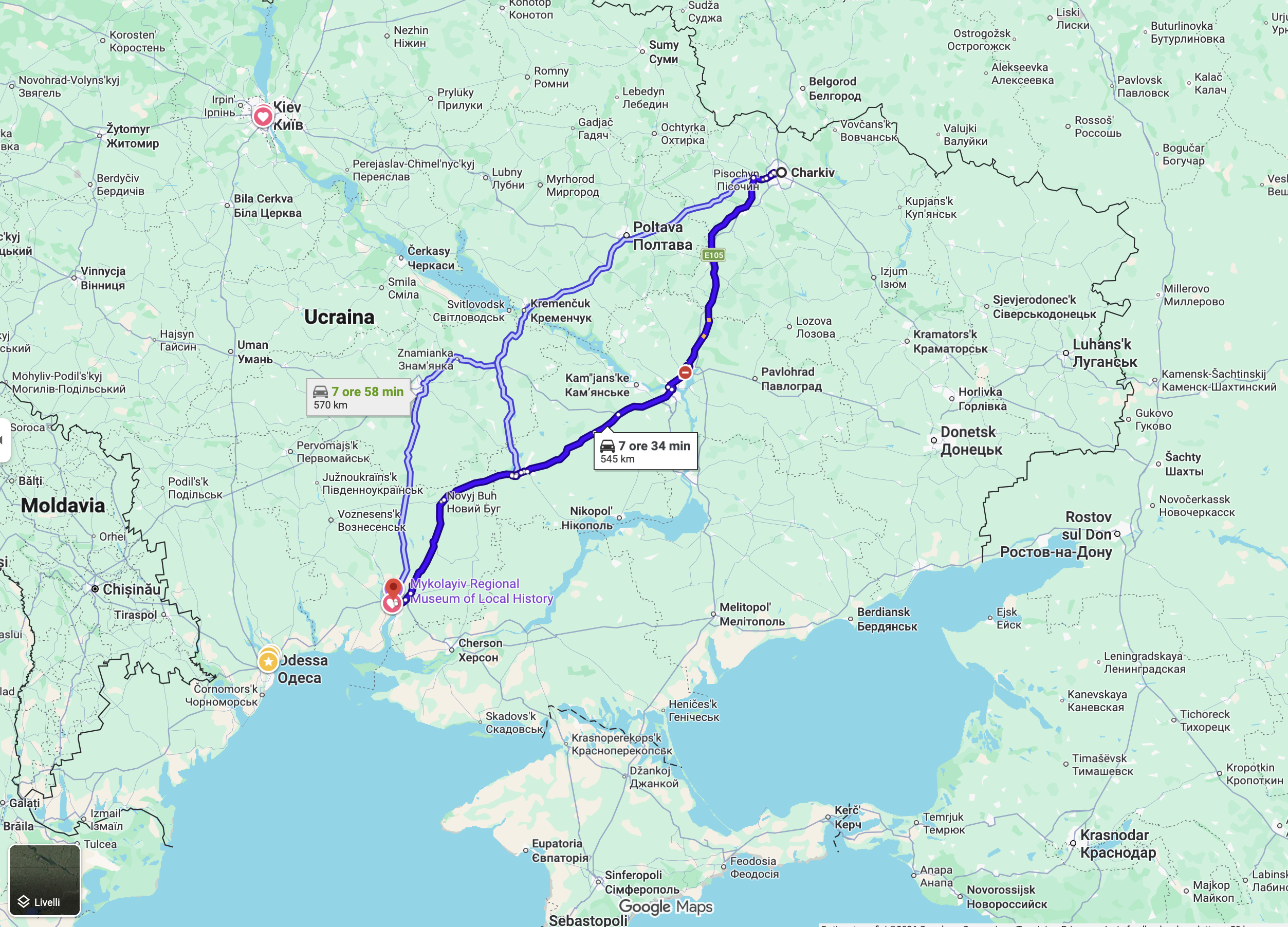
As next stop we headed to Mykolayiv, the closest city to the now heavily bombarded Kherson and our next stop, ran parallel to the frontline.
In the morning we met Oleg from the organization "Less Words, More Action"—weeks before, he had asked us to get a sterilizing oven for the pediatric hospital in Kherson. That day, we were not only supposed to hand it over but also join him on a different activity: the reconstruction of the children's park in his village, Possad Pokrovsk, that he was conducting with two other volunteers. However, the weather was rainy and totally unsuitable for this kind of job, so Oleg said we were to take a rain check on that plan.
Still, our first day in Mykolaiv turned out to be eventful all the same: in the early afternoon Oleg suggested going to the oblast of Kherson, to the village of Bobroviy Kut, where his two friends (themselves volunteers as well), Sasha and Vadim, had started renovating the local school. In only a few months, they had managed to refurbish the entire first floor and were now busy coordinating the works on the construction site in the yard. All of that to the soundtrack of the very near and constant bombings… Sasha, in his early forties and already a war veteran, told us that the Russian attacks in the area had intensified since July 2024 and that FPV drones very often targeted civilian infrastructure, especially hospitals, causing unimaginable damage. Also, Oleg said the forced recruitment continued and that in the region, few strong men were still allowed to do humanitarian work—the rest were already engaged in some frontline military activity.
October 28 | Mykolaiv
Animal Therapy
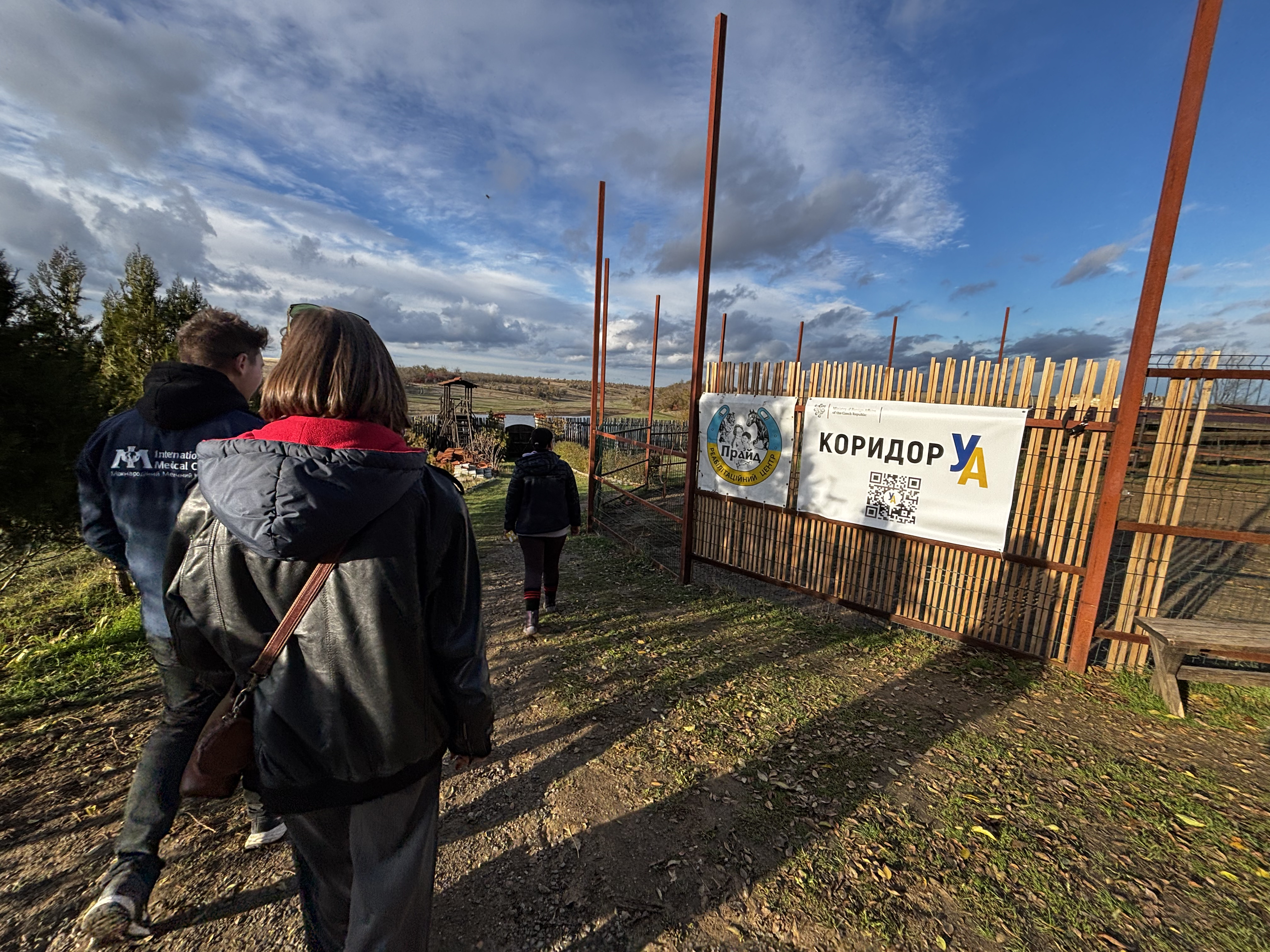
Humanitarian work is mostly seen as related to human beings. But we forget that people are not the only beings experiencing war and in need to be rescued. After approximately 20 km from Mykolaiv, a farm appears in the middle of an open field, the animal center Praid. A long line of children waiting for their session of hippotherapy welcomed us "horses have the power to regulate emotions, boost self-esteem and strengthen relational skills" says Adam from Koridor UA, the partner organizations who invited us here.
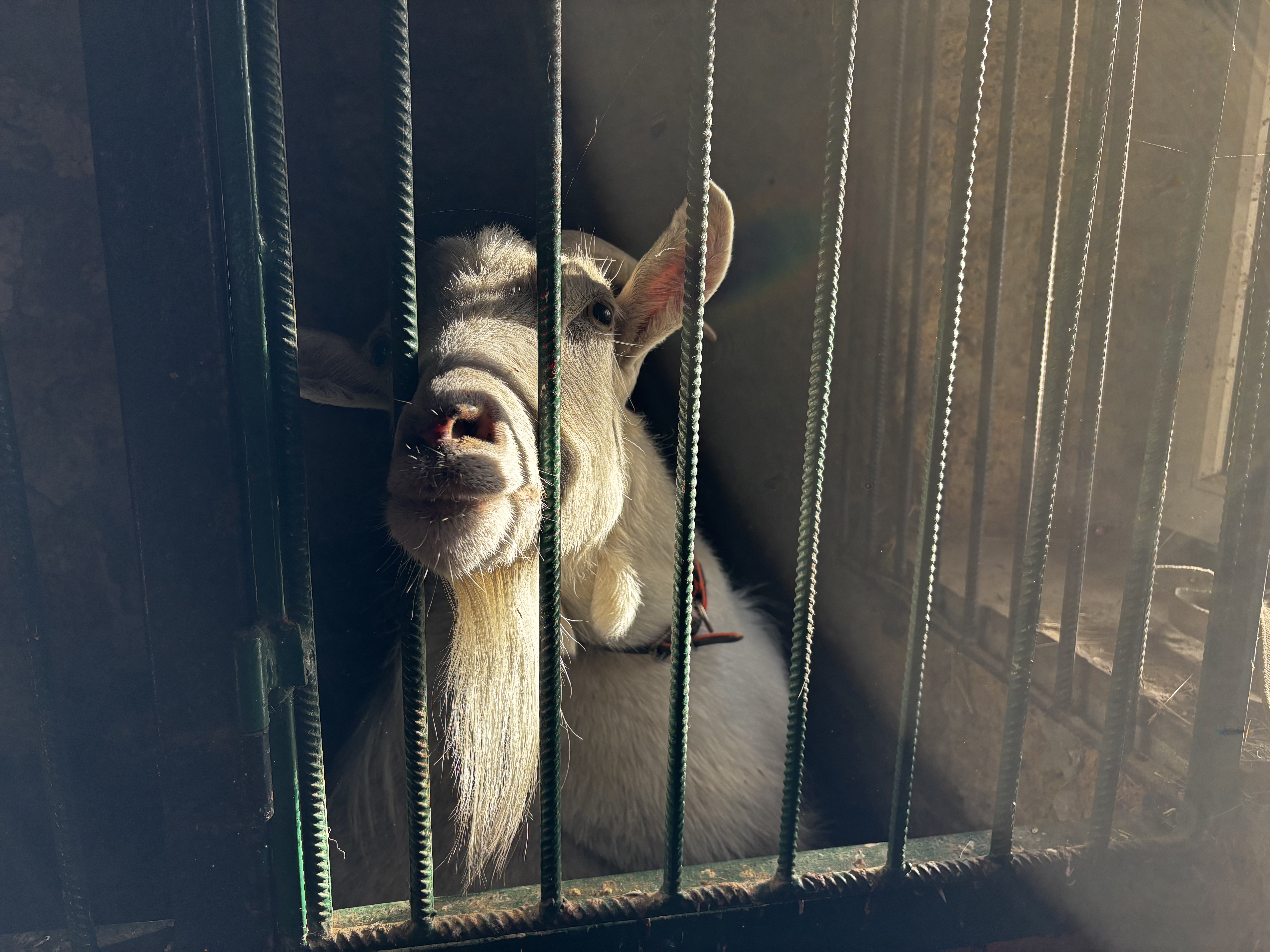
And not only horses are to be found here. Dogs, donkeys, rabbits, goats, ducks, racoons and many many more… but we cannot fail to mention the most charming animals: the ponies who apparently can also enjoy the services of a personal hairdresser. All of these animals have been rescued from war zones: maybe because they were at risk, the owners had to join the army, or the family had to abandon the village.
During the 8 months of Russian occupation, many children have been attacked by dogs used by soldiers to instill fear and trauma. At the Praid Center, a special role is played by the dogs themselves. Through a gradual program, moving from smaller to larger dogs, one of the center’s goals is to offer the children a path of reconnection and rebuilding of trust in other living beings - human or not.
In this oasis of peace and freedom apparentlty removed from the context of war, Koridor UA is building a winter home allowing this center to be open and active even during the coldest and toughest season. We meet the other volunteers that came here from all over the world "we have many open projects of rebuilding houses and schools and they all move forward, but slowyly. Our problem is not the scarsity of ideas and funds, our problem is the scarsity of manpower" says Adam. This is the reason behind our next appointment the following day.
October 29 | Oblast Mykolaiv
Hands-On School Reconstruction
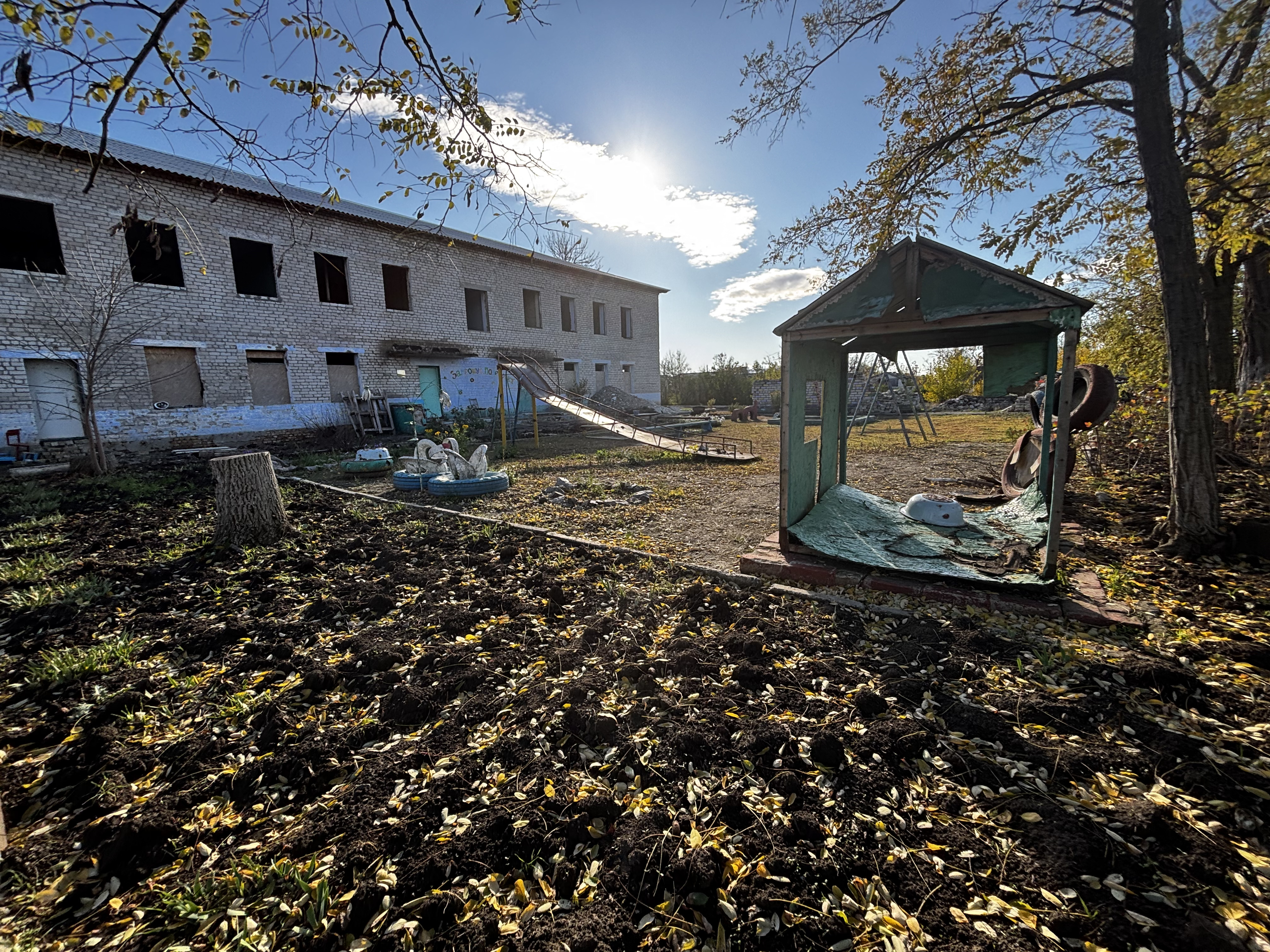
In the morning Koridor UA guided us towards the nearby area of Pervomaiske. As most of the Mykolaiv Oblast, even this zone has been under Russian occupation for almost 8 months in 2022 and the traces are still visible: roads, churches, farms and houses completely destroyed.
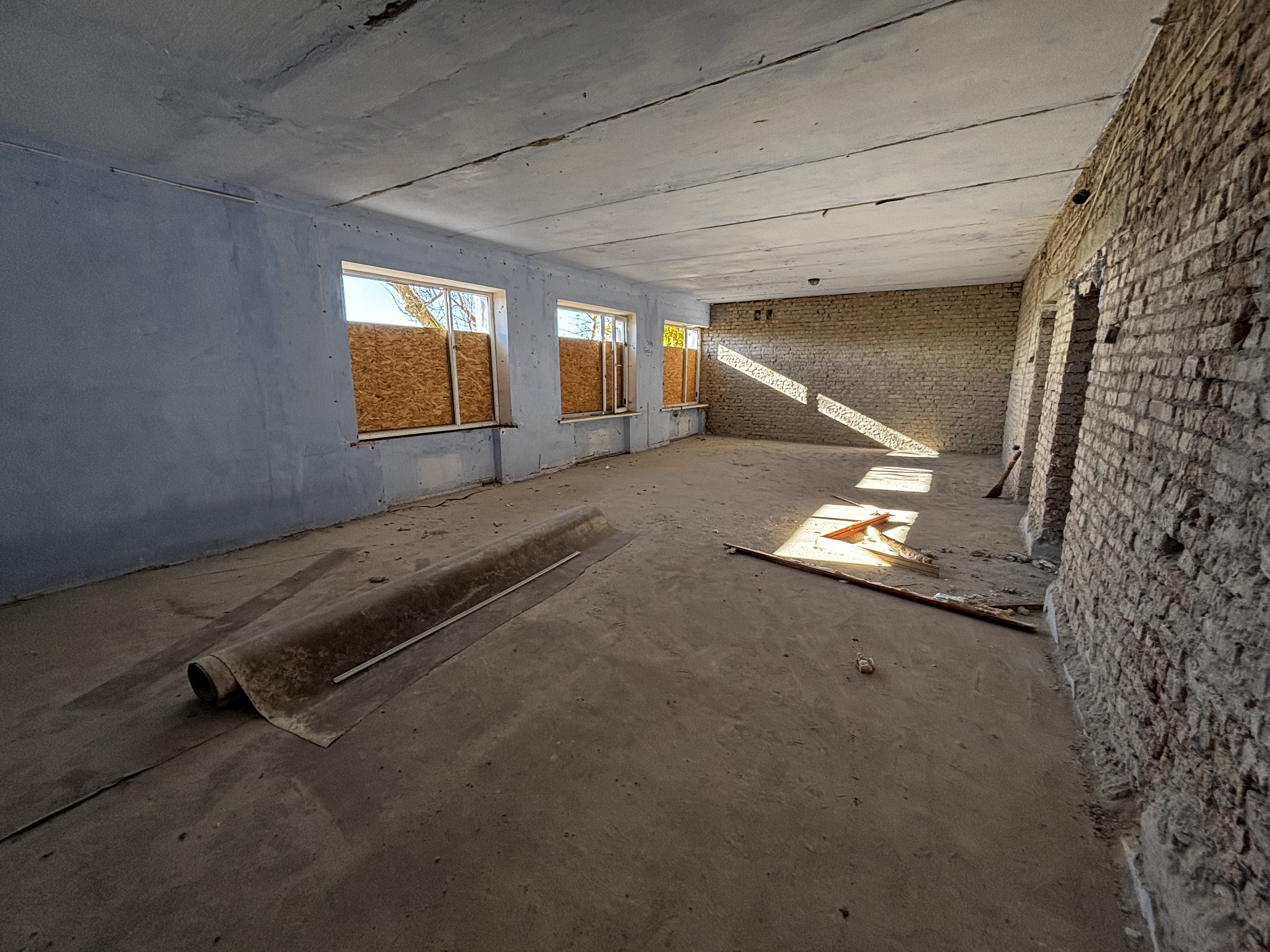
In the village we were supposed to be that day - we have been asked not to name for security reasons - the ruins of one school were barely visible, but the structure of a second school was almost still intact. Koridor UA had started the reconstructing project the year before and even if there have been already many tangible adjustments, the rebuilding phase was going slower than expected. As already said, the lack of local volunteers is still a problem and getting volunteers from abroad has become harder by the year.
Before getting to work we received professional instructions and special equipment —each of us assigned to a special task: inside the school we had to strip the plaster off the walls to facilitate a later structural repair and to remove the resulting debris from the premises; outside, further walls were to be torn down and the surface cleaned up.
An important part of the initial training was dedicated to security measures. We were warned to look out for asbestos within the walls—if we were to spot any, we were to inform the specialist, who would remove it safely and without further ado. Even though asbestos was indeed found within the walls, the toxic material was carefully and professionally isolated by Koridor UA.
At lunch, the villagers cooked for the entire team (around 12 volunteers—some American, some Czech, and some Ukrainian) and they told us stories from before, during and after the Russian occupation. Particularly memorable have been the words of a 7 years old little girl. When asked if she had any memory about the years of the occupation she lucidly answered: "I was too young to remember it all, but I recall hiding with my mother upstairs, and from downstairs hearing glass being shattered and objects smashed on the floor. It was the Russian soldiers".
While going back to work, we realized that the little girl had never been in a classroom. Thus the school we were rebuilding was also for her. The 8-hour work day felt fulfilling, but at the same time insufficient for what was still needed. We managed to finish off only 2 rooms and a small part of the backyard.
How much more would it take to rebuild a school? And an entire village or the whole country?

October 30 | Oblast Kherson
Village Revival and Roadside Rescue
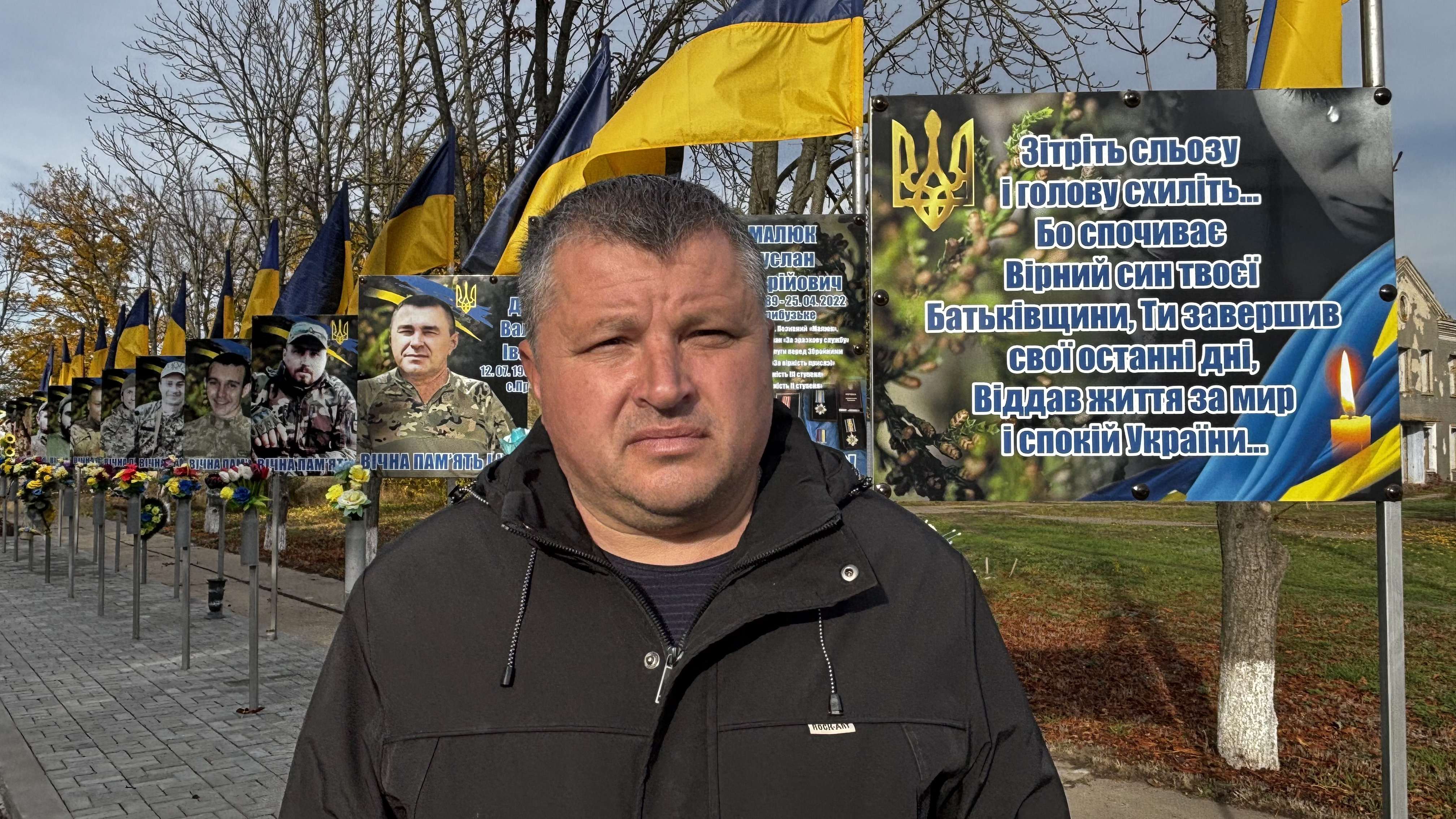
At 11am, Oleg from Less Words, More Action guided us to the village called Pribuzkoe, situated near the Kherson oblast border. It is here in the village school that Oleg has been organizing a cinema afternoon for the kids, once a week.
We also met the mayor who had managed to secure funds to renovate the village school — now boasting a fully equipped library and renovated classrooms with new desks and computers, a rarity here. For the mayor it was a duty to make sure that new generations have a future through education considering the many men the village had lost in this terrible war. Again we asked the question every Ukrainian was afraid to think about 'peace in exchange for territories?'.
The mayor referred to all the martyrs that defended their land and said he personally could not accept the idea of their deaths to be in vain.
For the time being, most people are still willing to resist and refuse to hand over any piece of land to the Russians. They are expecting this "first Ukrainian-Russian war" to go on for a while longer, followed by 5-6 years of frozen conflict ended by a "second Ukrainian-Russian war".
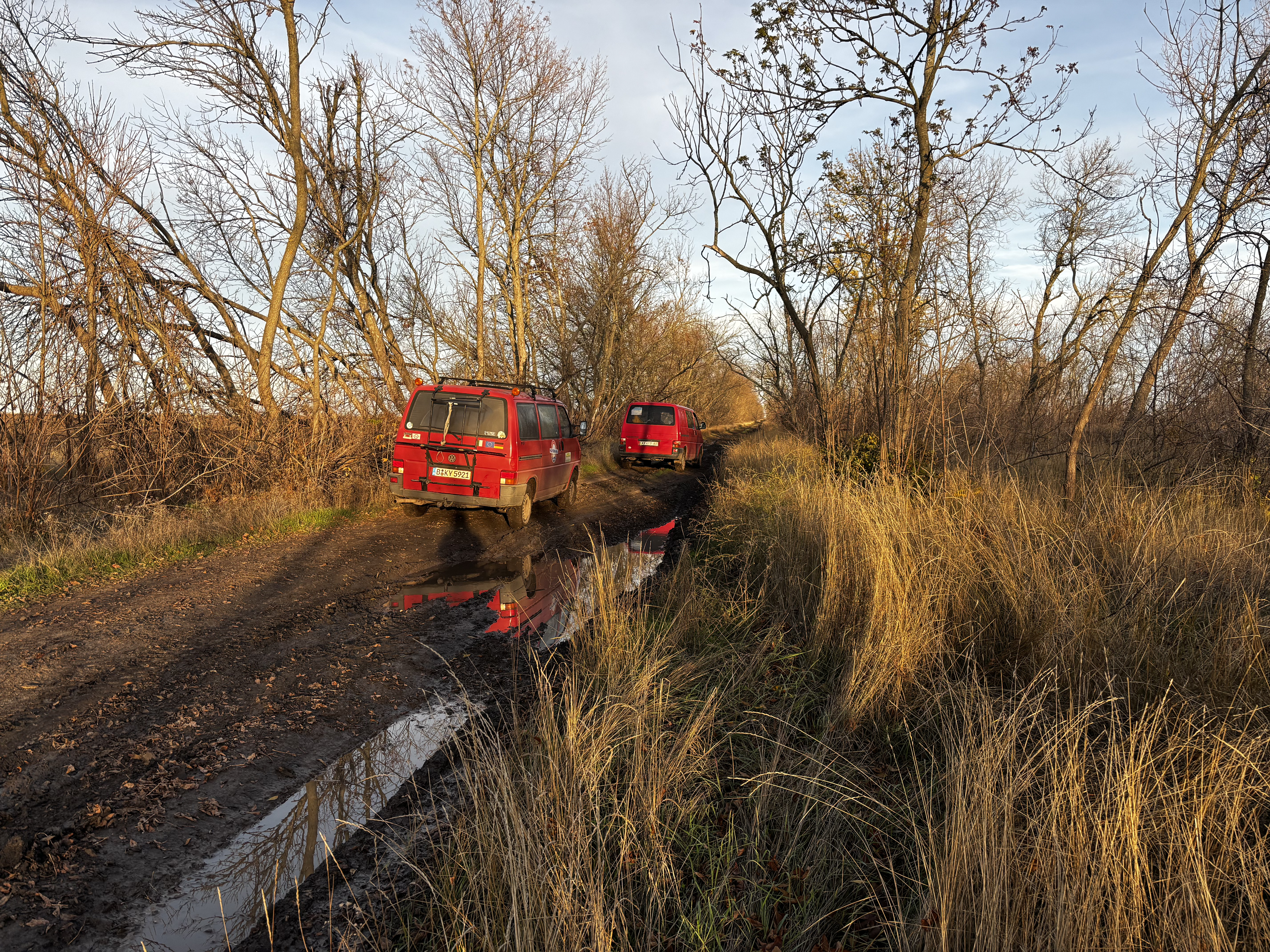
Returning to Mykolayiv, a time-saving shortcut turned perilous: off-road mud trapped our van beyond Oleg's towing reach. We were stuck on a lonely side road, in the middle of nowhere when, all of a sudden, a monster army truck driven emerged right when we had given up faith.
Two Ukrainian soldiers were transporting empty warheads and gear. One of the guys jumped out carrying a chainsaw - impressive, but not as effective as it may have seemed. Even more impressive were the videos played by one of the soldiers' Instagram account showing those warheads being shot by their brothers in arms in a nearby area they were not allowed to reveal.
One last try at towing our to their truck proved to be surprisingly successful. We were free to go and so were they.
October 31 - November 4 | Mykolaiv and surroundings
Last Days - Trip back to Berlin
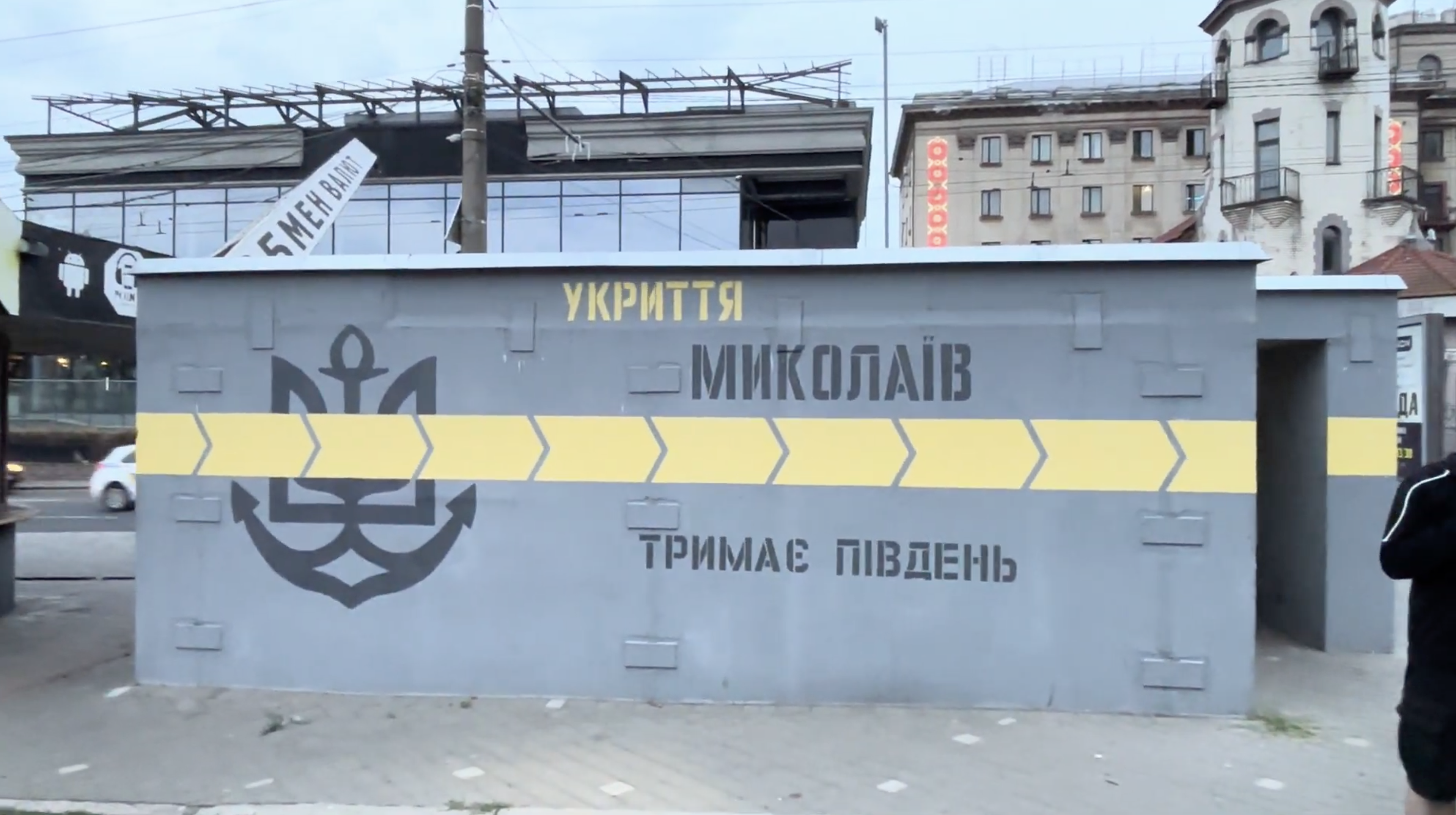
On the day of the departure, we were all systems go for the long drive from Mykolaiv to Berlin. But unexpected technical issues got the best of our trusted vehicle. Even with Oleg and Vadim coming to our rescue, the problem was not to be fixed on the spot and the mechanic added another 3 days to our stay in Mykolaiv. Ukraine didn't wanna let us go that easily this time round...

While awaiting repairs, we processed the substantial output from the 14 days of mission.
It was the second time we were in the south of Ukraine - and we found the entire area utterly changed in comparison to July 2024. While back then the situation permitted us to reach even Kherson city, this was not the case this year, considering the intense attacks. Oleg strongly advised to stay away from the city - the reason why we accompanied him only to the villages inside the Kherson oblast, but not to the city itself.
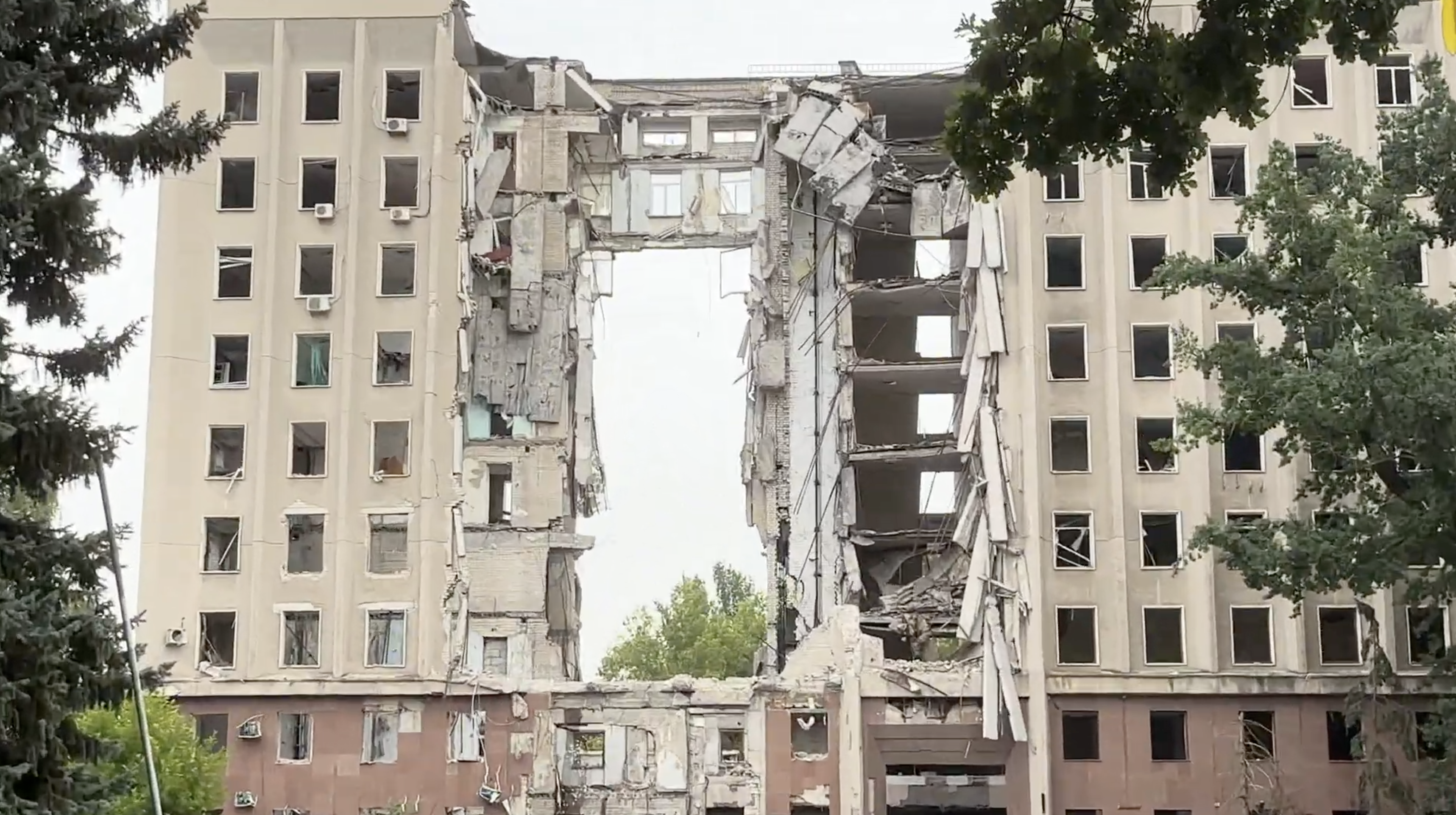
On the last day before departure, we finally managed to see Oleg's park project in his very village, Possad Pokrovskoe: it stood close to completion—playgrounds half-assembled and walkways winding through revitalized green spaces. The works were on standby not due to the lack of construction materials, but again, due to lack of manpower - a serious problem for Less Words, More Action as well. We had time for a last conversation about the future: according to Oleg, the only ones entitled to decide about renouncing the territories are exactly the people residing in those areas.
On the awaited day of the departure, the van finally roared back to life! By midnight, we were navigating the backroads of Lviv oblast, inching closer to the border amid Ukraine's strict curfew restrictions that normally halted all movement—yet local police in Ivano-Frankivsk and border guards, perhaps sensing our urgency or moved by the circumstances, waved us through with surprising efficiency, no endless queues or delays marring the night.
At 1am, we arrived at the Budomierz crossing on the Polish border, enveloped in the thickest, most disorienting fog imaginable that reduced visibility to mere meters and turned the crossing into a test of nerves and slow-motion precision. Despite the eerie conditions and the weight of exhaustion, we pressed on successfully, reaching Görlitz by 11am after enduring what felt like the longest and most unnecessary border control within the seamless Schengen Area.
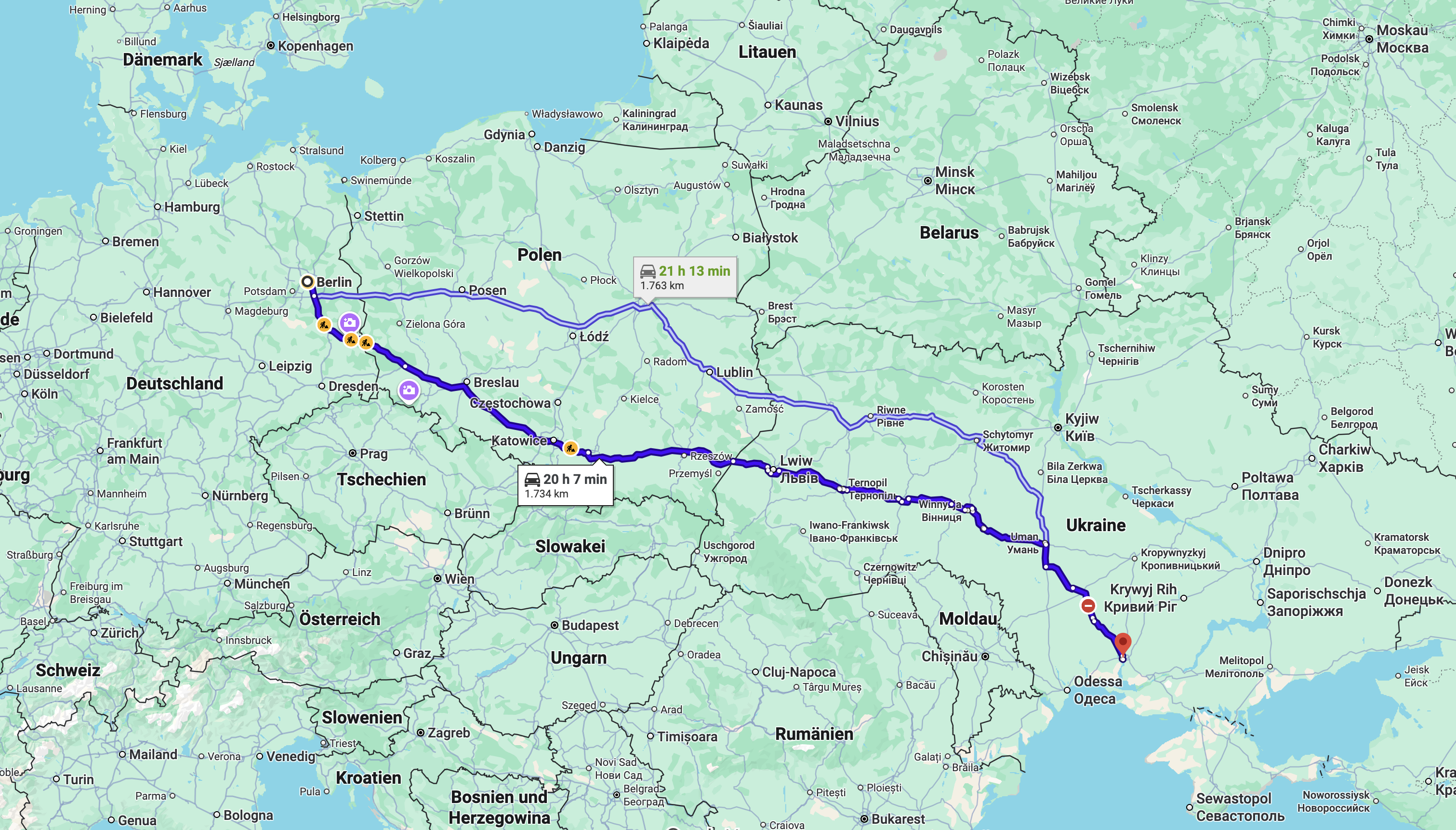
Finally, the last stretch to Berlin unfolded on clear, open highways evoking a profound sense of homecoming after what had felt like an eternity away; mission accomplished, with relief washing over us as the city's skyline came into view.


